What a Compliant Public Roof Bid Looks Like in the Capital Region
Review the scope, field conditions, system options, and planning considerations for this commercial roofing topic.
Read More →
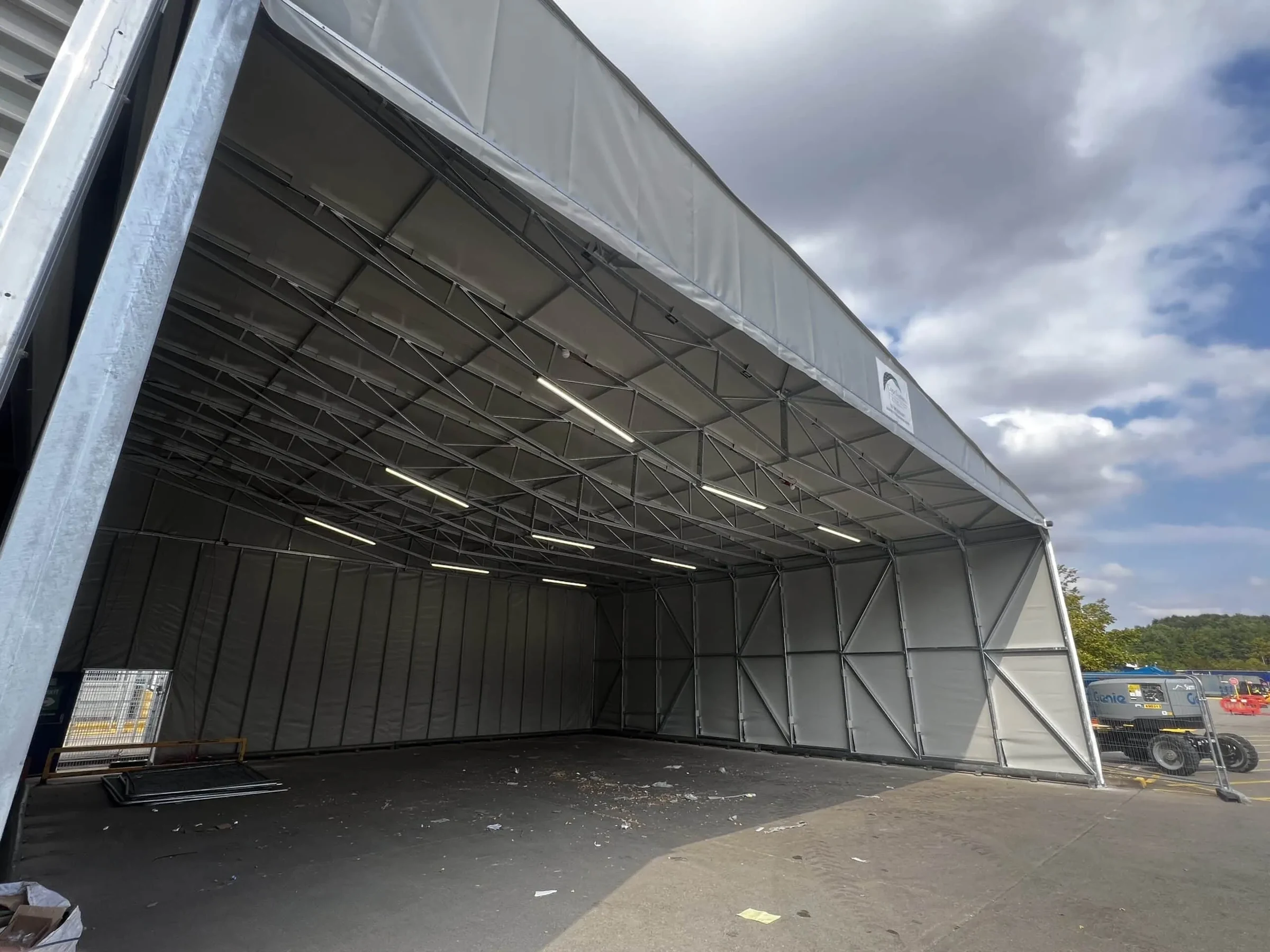
The Capital Region's logistics footprint has grown fast along the I-90 corridor, and most of that growth is single-story buildings with enormous flat roofs running over active dock operations. An operations manager at one of these facilities doesn't have the luxury of shutting a building down for roof work, and a roofing contractor who doesn't understand that isn't going to get a second call.
Schodack's I-90 corridor carries some of the newest fulfillment and distribution construction in the region, big single-ply roofs on buildings built specifically for 24-hour operation. Selkirk, home to the CSX rail yard, has an older mix of rail-served warehouse buildings where roof age varies a lot more than in the newer Schodack construction. Rotterdam and Glenville's industrial parks add another cluster, including grocery distribution tied to Golub Corporation's operations, and Menands carries a different kind of logistics building entirely, older wholesale market warehousing that's been retrofitted for modern distribution use.
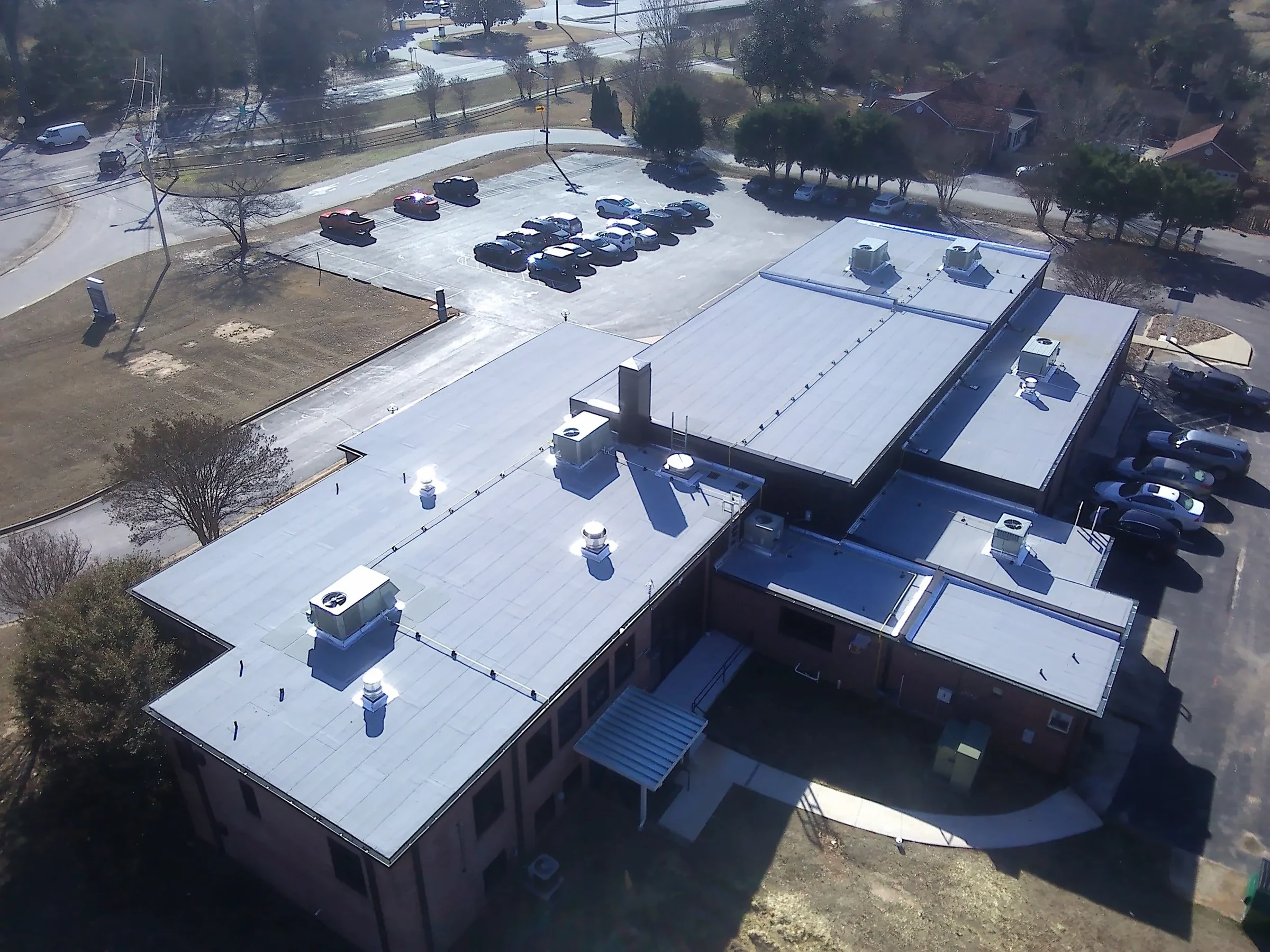
Most of these buildings run TPO or EPDM single-ply membrane, and the failure points are consistent across the region: seam integrity at field splices and penetrations, membrane fatigue around rooftop unit curbs that were added or relocated after the original install, and drainage that hasn't kept pace with racking loads and mezzanine additions inside the building. A roof designed for the original tenant's layout doesn't always match the roof loading a 3PL operator's racking system creates decades later.
Roof drains and scuppers get overlooked until they're the reason for a leak. On a building this size, a partially clogged drain during a heavy rain event can mean standing water measured in inches across a section of roof, and that ponding accelerates membrane wear faster than almost anything else short of physical damage.
A 3PL building rarely goes fully dark, so we plan roof work in sections that keep the building watertight and functional at every stage rather than opening more roof than we can close in a single shift. Night and weekend work is common on these projects specifically because it avoids the highest-traffic dock hours, and we coordinate directly with the site's operations manager rather than a remote corporate office that doesn't know the building's daily rhythm.
Before pricing a distribution roof, an operations manager should be able to get straight answers on:
Capital Region winters put real weight on a large flat roof, and a building converted from an older use into modern distribution space doesn't always have documented structural capacity for today's snow loads plus racking and rooftop equipment combined. We flag that gap before recommending a recover over an existing system rather than after. Ice damming at parapet walls and around rooftop units creates the same freeze-thaw water intrusion problem here as it does on any flat roof in the region, just across a much larger area.
The scale of these roofs changes how a snow event gets handled operationally, too. A building with a footprint measured in hundreds of thousands of square feet doesn't get shoveled by hand, and mechanical snow removal on a membrane roof carries its own risk of tearing or puncturing the surface if it's done carelessly. We talk operators through where mechanical removal makes sense versus where it's safer to let a roof carry the load and monitor drainage instead, since the wrong removal method can cause more membrane damage than the snow itself would have.
A lot of 3PL and logistics operators run more than one building in this market, sometimes across Selkirk, Rotterdam, and Schodack at once, and want consistent documentation across all of them rather than a different report format from a different contractor at each site. We run inspection cadence and reporting the same way across every building in a portfolio, so a regional facilities manager can compare roof condition across sites on equal terms.
Rail-adjacent buildings near the CSX Selkirk yard add a wrinkle a purely highway-served warehouse doesn't have: vibration from nearby rail traffic over years can work fasteners and seams loose in ways that aren't always obvious from a routine visual walk. We factor that into inspection frequency on rail-adjacent buildings rather than treating every warehouse in the portfolio identically regardless of what's operating next to it.
In almost every case, yes. We section the work so active dock areas stay covered and functional while we're working on a different part of the roof.
Yes, and on active distribution buildings it's often the default plan rather than an exception we make on request.
We flag that as a structural question before recommending a system, since a recover on a roof already near its load limit isn't the right answer even if it's the cheaper one up front.
We don't leave a roof section open overnight or ahead of incoming weather. Temporary dry-in goes down before we stop, even if that means a slower overall pace.
Yes, and we keep the reporting format consistent across sites so a facilities manager overseeing several buildings can compare condition data directly.