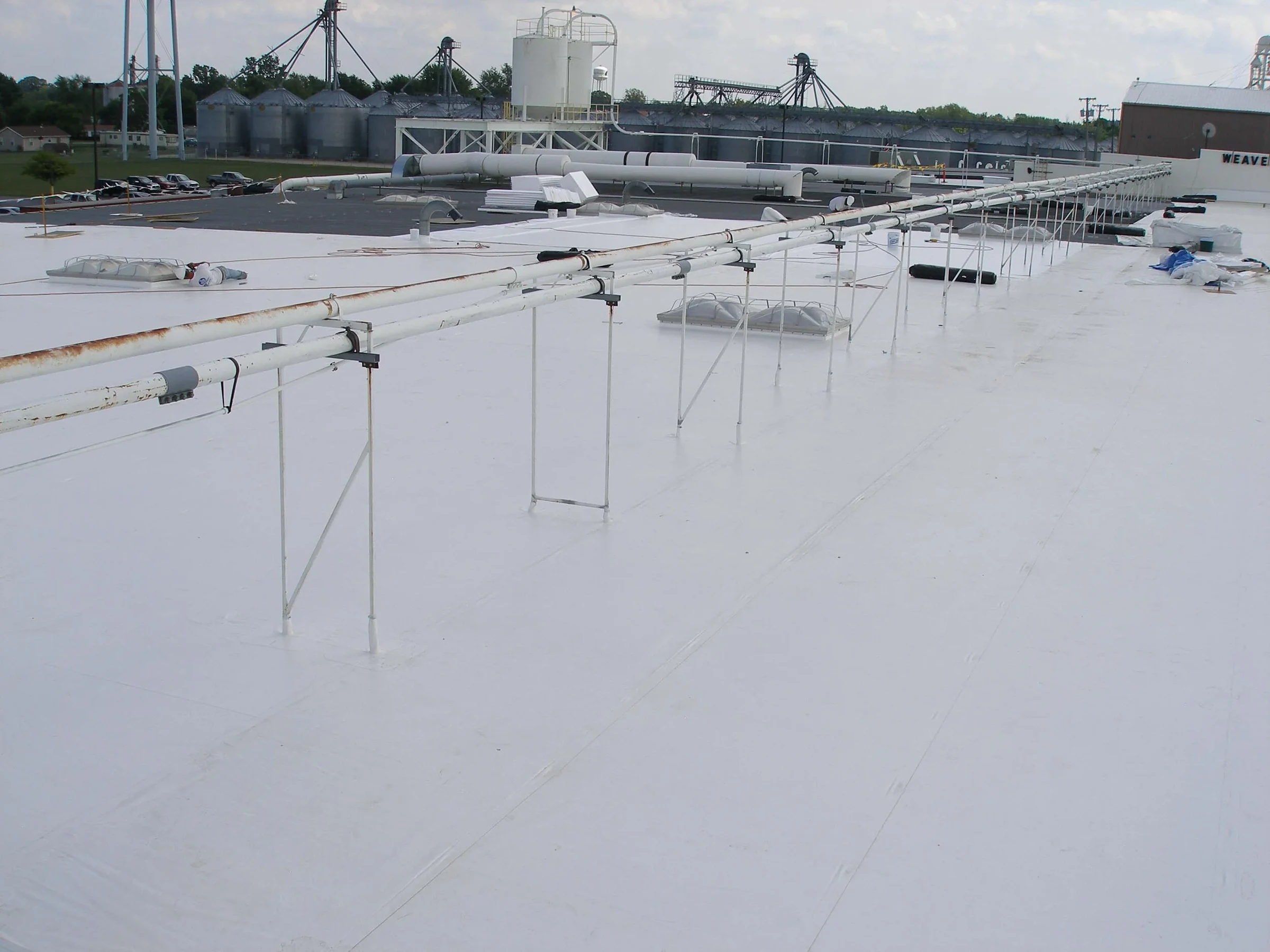
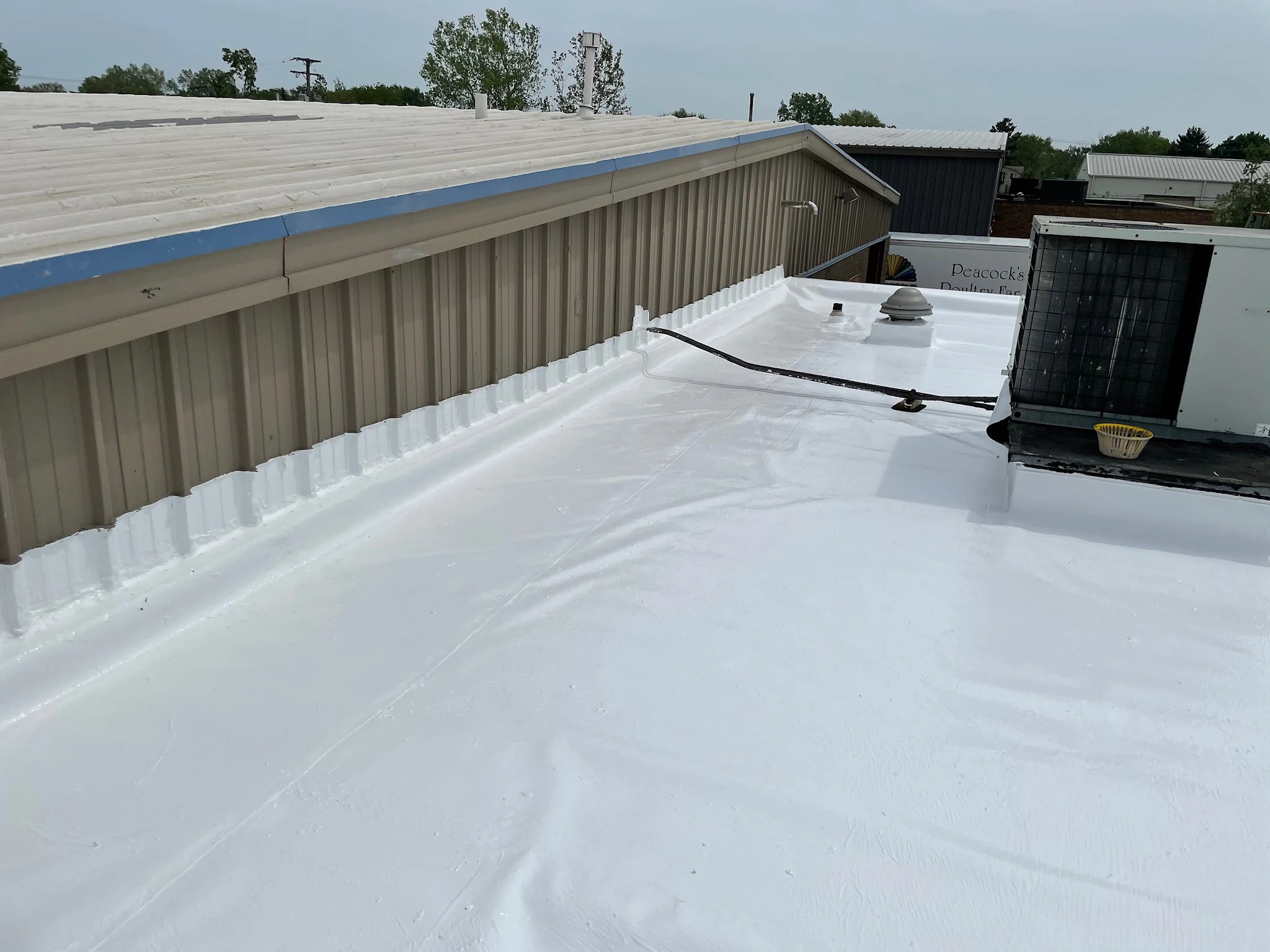
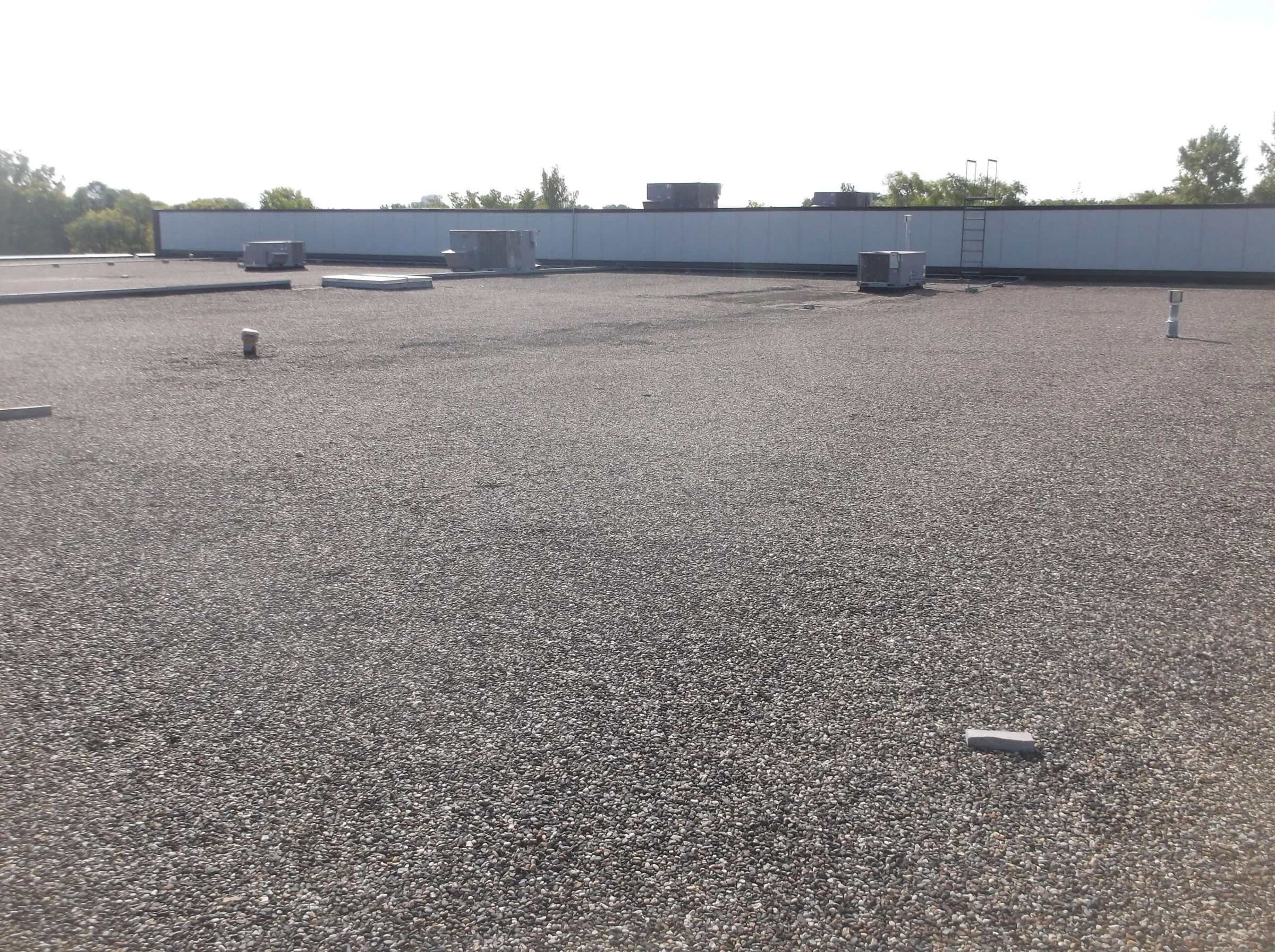
TPO for Albany's Government and Distribution Roofs
Review the scope, field conditions, system options, and planning considerations for this commercial roofing topic.
Read More →
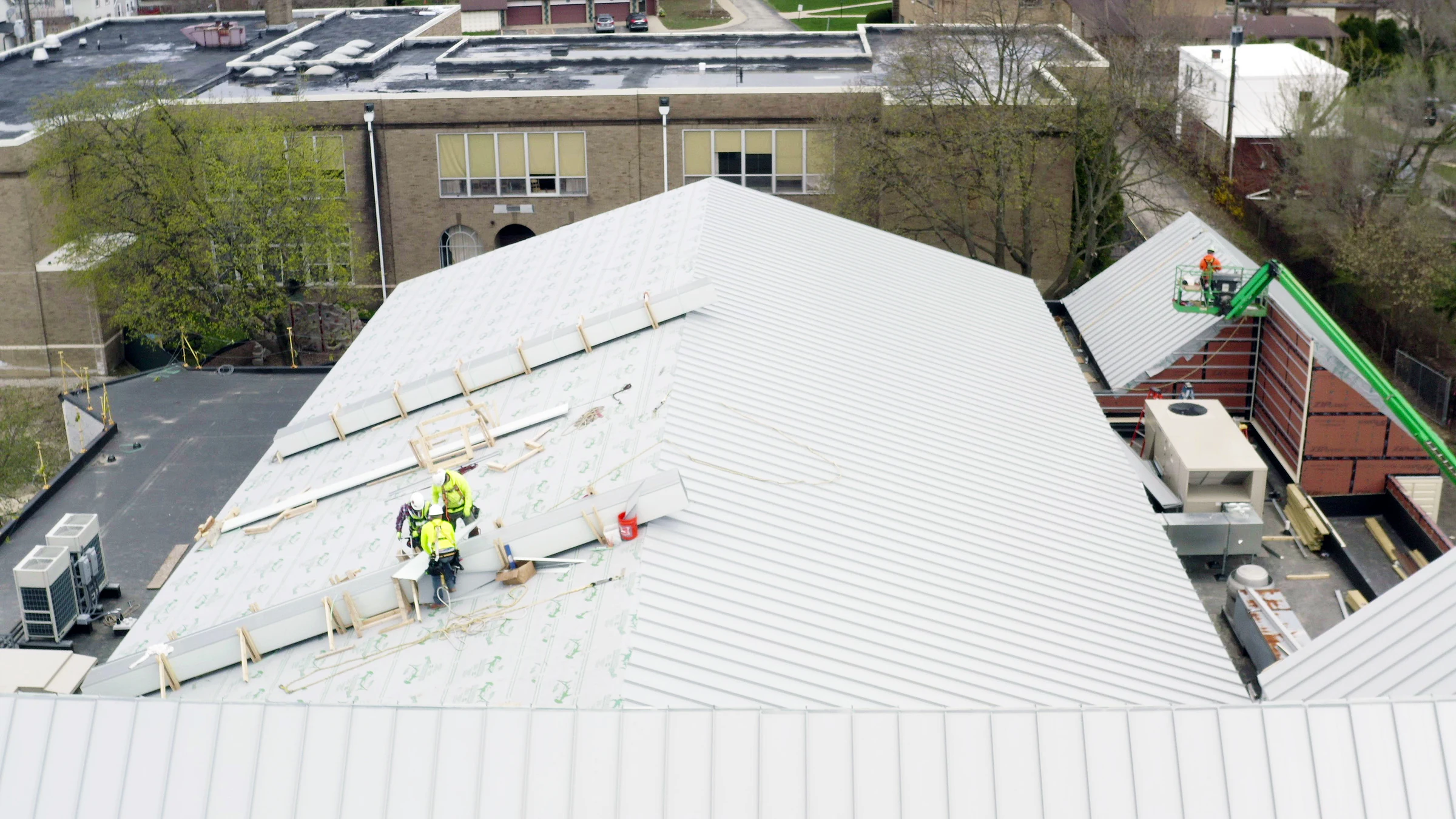
Standing seam metal roofing shows up on a different slice of Capital Region buildings than the flat single-ply and asphalt systems we install most: hospitality buildings in Saratoga Springs, retail with visible roof lines, and any building where snow retention and sightline both matter. It's a system where clip spacing and snow load handling deserve more attention in a bid than they usually get.
Hospitality buildings around downtown Saratoga Springs, near the racetrack and convention center district, often use standing seam metal on sloped sections where the roofline is visible from the street and appearance matters as much as performance. Concealed fasteners give a cleaner look than exposed-fastener metal panels, which is part of why it gets specified on buildings guests actually see.
We also install standing seam on portions of retail buildings along commercial corridors in Clifton Park and Guilderland, and on office buildings in Latham and Colonie where a sloped metal roof section sits above a flat single-ply field, a common hybrid roof configuration in this market.
A smaller number of standing seam projects come from schools and municipal buildings that want the look and low-maintenance reputation of metal on a visible entrance canopy or administrative wing, even when the bulk of the building's roof area stays single-ply. In those cases the standing seam section is small but still needs the same attention to clip spacing, finish, and snow retention as a full roof, since the building's most visible roof area is usually the one closest to where people walk.
The Capital Region gets enough snow load that a standing seam roof without a snow retention system is a liability, not a design choice. Metal roofing sheds snow in large slides, and without retention, that snow comes off in a sheet that can damage landscaping, block entrances, or injure someone walking below during a thaw.
A bid for a standing seam roof over any occupied entrance, walkway, or parking area needs to address snow guards or a retention system as part of the scope, not as an optional add-on quoted separately after the fact. We won't recommend a standing seam installation over a pedestrian area without it.
Standing seam panels attach to the roof deck through concealed clips rather than exposed fasteners, and the spacing of those clips is what determines the roof's wind uplift resistance. A bid that specifies panel gauge and finish but doesn't mention clip spacing or the uplift rating for your building's height and exposure is skipping the engineering detail that actually protects the roof in a wind event.
Panel gauge itself varies, and a thinner gauge panel costs less but performs worse under both wind load and foot traffic during maintenance. We check what gauge is actually being quoted rather than assuming a proposal's photos represent the material you're paying for.
Most standing seam panels here get a factory-applied finish, commonly a Kynar-based coating, that resists fading and chalking better than lower-grade paint systems. The finish quality affects how the roof looks after ten or fifteen winters of freeze-thaw cycling and UV exposure, which matters more on a hospitality building where curb appeal is part of the business case for the roof in the first place.
What we make sure a standing seam proposal specifies:
Metal roofs shed water fast, which is a benefit most of the year and a liability during a hard freeze-thaw stretch when meltwater refreezes at the eave before it clears the roof edge. Ice and water shield underlayment at eaves and valleys is the standard defense against that, and it's a detail worth confirming rather than assuming is included in a metal roofing bid.
Buildings with complex rooflines, multiple valleys, or transitions between a sloped metal section and a flat single-ply field need extra attention at those transition points, since that's consistently where we find the leaks on standing seam roofs installed by other contractors.
Gutter and downspout sizing matters more on a standing seam roof than on a membrane roof, since metal sheds water faster and in larger volume during a rapid thaw. Undersized gutters overflow and send water back against the fascia or foundation instead of away from the building, which is a detail worth checking against the roof's actual drainage area rather than the building's original gutter system if the roof has been replaced since original construction.
If there's an entrance, walkway, or parking area below the roof edge, yes. We won't install without a retention plan in those situations.
It depends on the building's height, exposure, and expected service life, but we'll walk through the tradeoff between gauge, cost, and performance for your specific roof.
The transition detail between a sloped metal section and a flat membrane roof needs careful flashing design. It's one of the more common leak points we find on hybrid roofs.
Kynar-based coatings hold color and resist chalking significantly longer under UV exposure and freeze-thaw cycling than standard paint systems.
Yes, generally, due to the concealed clip system and typically heavier gauge. It's worth it on visible rooflines; for a warehouse where appearance doesn't matter, exposed-fastener metal panels are often the more practical choice.