Roofing the Route 7 Retail Strip in Brunswick
Review the scope, field conditions, system options, and planning considerations for this commercial roofing topic.
Read More →
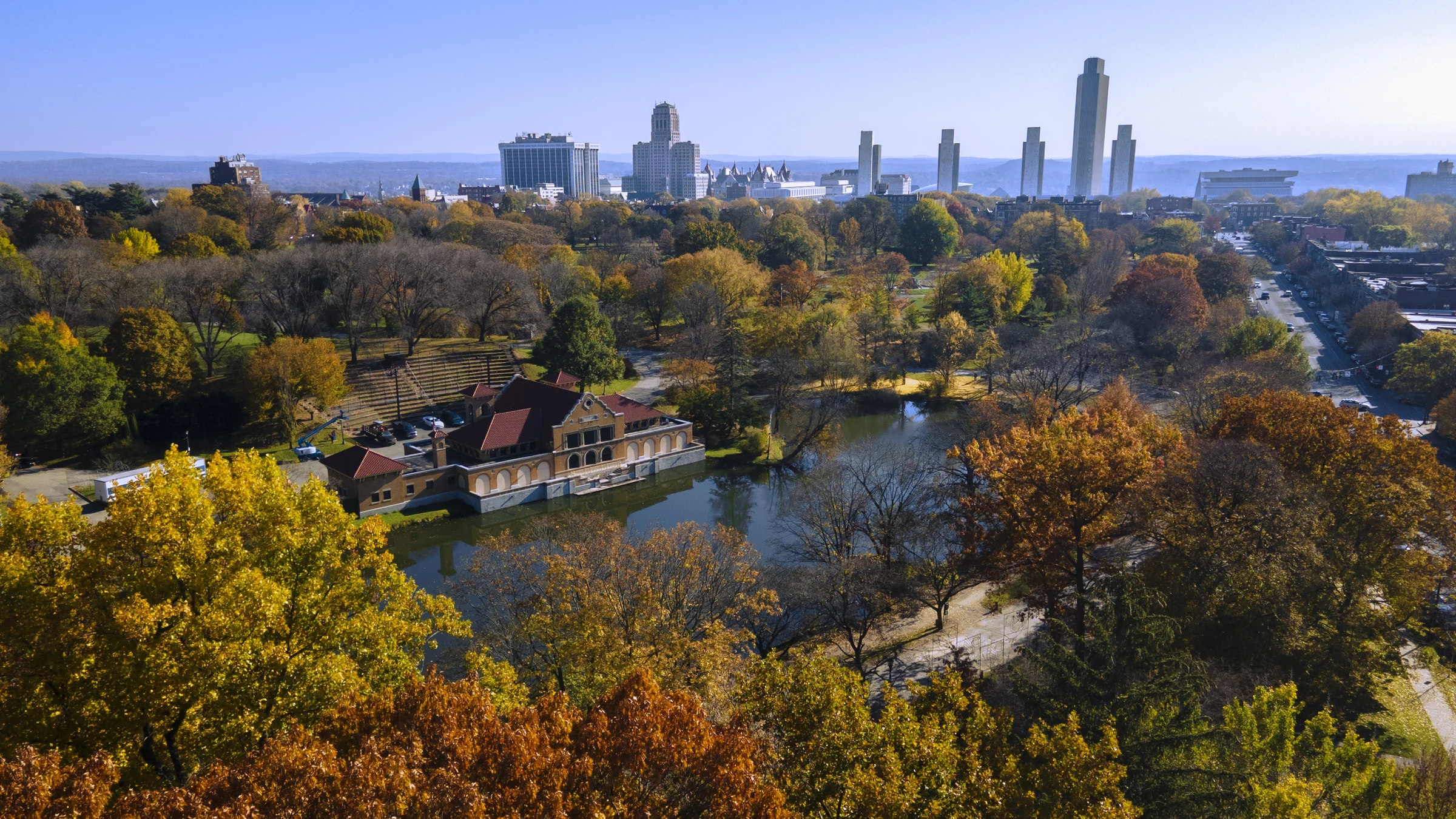
A practical commercial roofing plan for North Greenbush properties separates urgent leak control from repair, coating, maintenance, and replacement decisions supported by photos and condition findings. North Greenbush isn't one building type. Rensselaer Technology Park has low-rise research and office buildings built in phases over decades, and Route 4 south of Troy carries a mix of office buildings, medical suites, and small professional plazas. We've reroofed and repaired both, and the bids we compete against usually treat every one of these buildings like the same generic flat roof, which is where owners get burned.
Because the tech park filled in over decades rather than in one build-out, roof ages vary building to building even within the same complex. One building might be on its original built-up roof from an early phase, the next on a single-ply system installed after a later renovation. A contractor who quotes the whole park off one site visit to the newest building is guessing at the condition of the others.
We walk each roof separately and price it off what's actually up there, not off the building next door. That matters most at flashing details and parapet caps, where age and prior repair quality diverge the most between buildings on the same campus.
Office and research tenants add rooftop load that a standard retail box never sees: supplemental condenser units, extra exhaust for lab-adjacent space, sometimes a small generator platform for a tenant that can't lose power. Every one of those is a penetration and a curb that has to be flashed correctly, and every one gets added after the original roof was designed, often by whoever installed the equipment rather than a roofer.
Before we quote a reroof at the tech park or along Route 4, we inventory every rooftop attachment against the roof plan. Unaccounted curbs are one of the most common causes of leaks we find on multi-tenant office roofs, because they were flashed once, correctly or not, and never inspected again.
We've reviewed enough competing quotes on North Greenbush buildings to know the shortcuts. A tear-off price that assumes one layer of existing roofing when there are actually two. A flashing allowance that doesn't account for the number of rooftop units actually on the building. A schedule that ignores tenant business hours entirely.
Multi-tenant office buildings don't shut down for a roof job. We sequence tear-off and dry-in by section so only the area directly under active work is exposed at any point, and we schedule noisy work like tear-off and mechanical fastening around tenant meeting hours where the property manager asks for it. Research tenants in particular sometimes run sensitive equipment that can't tolerate vibration or debris, and we plan around that rather than finding out mid-project.
We also stage materials on roof access points that don't cross tenant parking during business hours, since several buildings here share lots with limited visitor spaces.
Low-slope roofs on office buildings in this area go through the same freeze-thaw cycles as everything else in the Capital Region, but they show it differently than a warehouse roof because the rooftop equipment concentration is higher and drainage paths are more broken up by curbs and units. Water finds the low points between equipment pads and sits there through freeze cycles, working at seams and flashing edges that a quick visual inspection from the parking lot would never catch. We track ponding patterns across seasons before recommending a full reroof versus a targeted repair, since not every low spot needs the same fix. On a couple of the older tech park buildings, a single tapered insulation cricket at one persistent low spot solved a ponding problem that had been misdiagnosed for years as a membrane defect.
We can, but we still walk and price each roof separately. Buildings built in different phases of the park's development have different roof histories, and lumping them into one number usually means someone overpays for the newer roof or underpays for the older one.
We inventory every curb and penetration against the original roof plan and re-flash anything that looks like it was added later without proper detailing, rather than assuming it's fine because it hasn't leaked yet.
We phase the work by section and coordinate louder tasks with the property manager's schedule, so most tenants see contained activity rather than a full building shutdown.
Yes. Because roof systems vary building to building here, we carry crews and materials for both and price each roof on its own system rather than pushing one product across a mixed campus.
Unaccounted rooftop equipment installed after the original roof, without proper curb flashing, is the single most common source we find during inspections here.