EPDM Rubber Roofing for the Capital Region's Older Buildings
Review the scope, field conditions, system options, and planning considerations for this commercial roofing topic.
Read More →
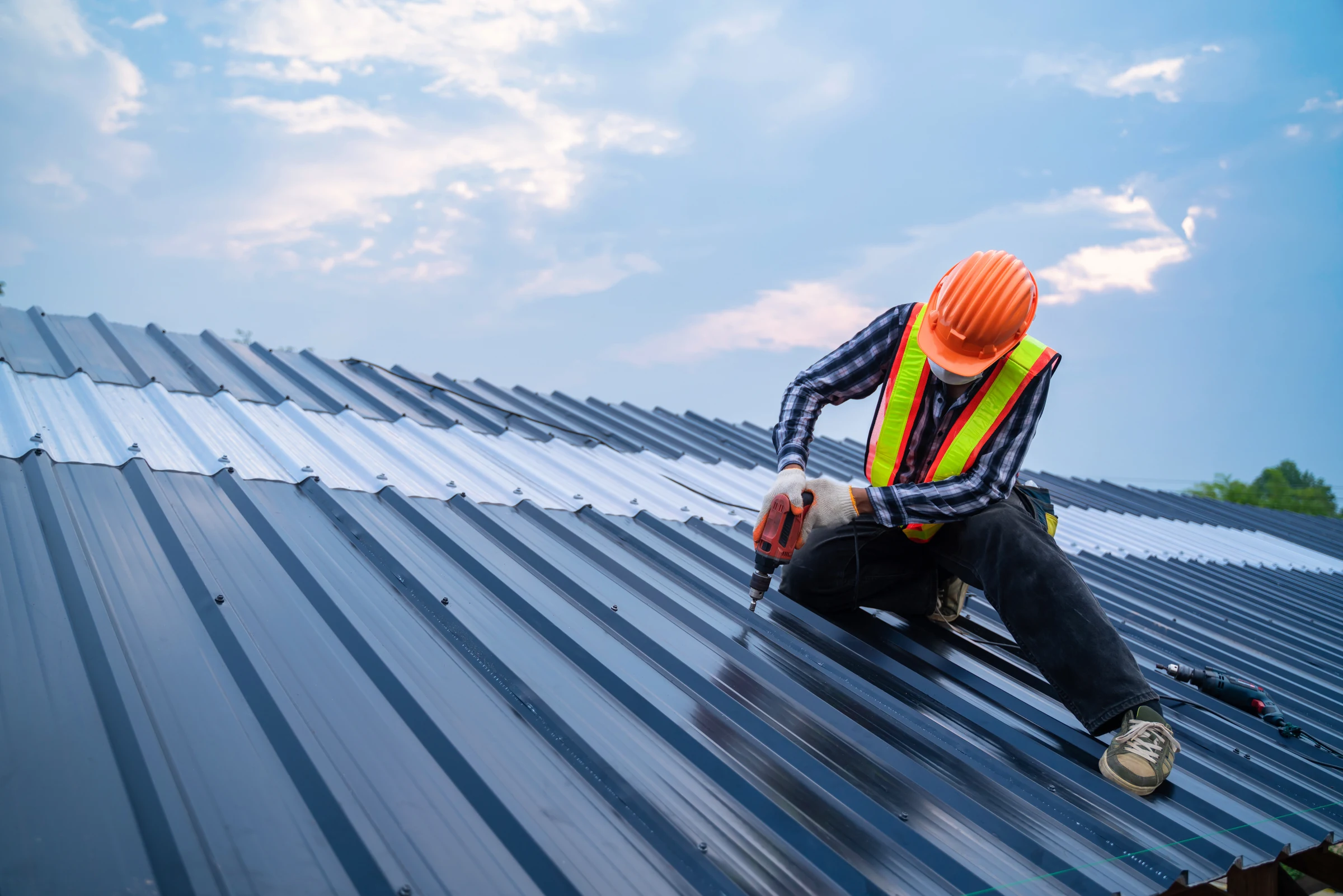
Exposed-fastener R-panel metal roofing is the workhorse system on a lot of the Capital Region's light industrial and warehouse buildings, particularly around rail-served sites near Selkirk, the marine industrial park at the Port of Coeymans, and older manufacturing buildings in Green Island. It costs less than standing seam and works fine for the job, as long as the fastener details are handled correctly.
Warehouse and light manufacturing buildings near the CSX Selkirk rail yard commonly use R-panel roofing, where budget and straightforward maintenance access matter more than the concealed-fastener appearance of standing seam. The marine industrial buildings at the Port of Coeymans and older manufacturing stock in Green Island, some tied to the area's hydroelectric and industrial legacy, follow the same pattern.
We also see R-panel on distribution buildings in Rotterdam's industrial park and Glenville, where a large simple gable roof over a warehouse doesn't need the higher cost of a concealed-fastener system to perform well.
R-panel roofing attaches through exposed screws driven directly through the panel into the structure below, each one sealed with a rubber washer. That washer is the single point of failure on this entire roof system, and it's also the detail most contractors don't explain clearly in a bid.
Neoprene washers under the screw heads degrade with UV exposure and the Capital Region's freeze-thaw cycling over time, and once a washer hardens or cracks, water finds its way through that fastener hole directly into the building. A roof with a few hundred fasteners across a large industrial field has that many potential leak points, which is why fastener quality and screw spacing matter more on R-panel than on almost any other metal system.
A bid that just lists "metal R-panel roofing" without naming the fastener type, gauge, and screw spacing is a bid that hasn't actually engineered the roof's weak point. Higher-quality fasteners with better washer compound and coating resist the freeze-thaw and UV breakdown that causes early leaks, and they cost more per fastener but far less than a re-fastening project a decade earlier than it should be needed.
On an R-panel proposal we check for:
On an older R-panel roof where the panels themselves are still structurally sound but fasteners are failing across the field, re-fastening with new, higher-quality screws and washers is often a legitimate and far cheaper alternative to full panel replacement. We check both panel condition and fastener condition before recommending either path, since panels with significant rust-through or structural damage need more than new screws.
A contractor who jumps straight to full replacement without evaluating whether re-fastening solves the actual problem is selling a bigger project than some of these roofs need.
We've re-fastened warehouse roofs near Rotterdam's industrial park that had another contractor's tear-off proposal on the table, and the panels themselves had another decade of service left once the fastener issue was corrected. That's not the right call on every roof, but it's worth ruling out before agreeing to a full replacement budget.
Buildings at the Port of Coeymans marine industrial park see more corrosive exposure than a typical inland warehouse, given the riverfront and industrial operations nearby. Panel coating quality and fastener corrosion resistance matter more on these buildings than on a standard Selkirk or Rotterdam warehouse, and we spec accordingly rather than using the same fastener package across every industrial building regardless of exposure.
R-panel roofs on large industrial gables carry real snow load through the Capital Region winter, and structural capacity at the purlins and fastener points has to hold that weight without the panel deflecting enough to stress the fastener seals. On older buildings we check the structural framing before recommending a straightforward re-cover, since a roof that's been re-covered once already may be carrying more dead load than the original design anticipated.
It depends on fastener quality and exposure, but washer degradation is a gradual process we can usually catch during an inspection before it turns into active leaks.
When the panels themselves are sound, re-fastening with quality screws is a legitimate long-term fix, not a stopgap. We'll tell you if your panels have moved past that point.
Riverfront and industrial exposure accelerates coating and fastener wear. We factor that into the fastener and coating spec for buildings in that area.
Not for every building. R-panel costs less and performs fine on a straightforward industrial gable roof where concealed fasteners and appearance aren't priorities.
Yes, when the structural framing and fastener spacing are properly specified for the building's snow load requirements. We check the structural side before signing off on a scope.