60-Mil TPO and the Missing Number on Most Bids
Review the scope, field conditions, system options, and planning considerations for this commercial roofing topic.
Read More →
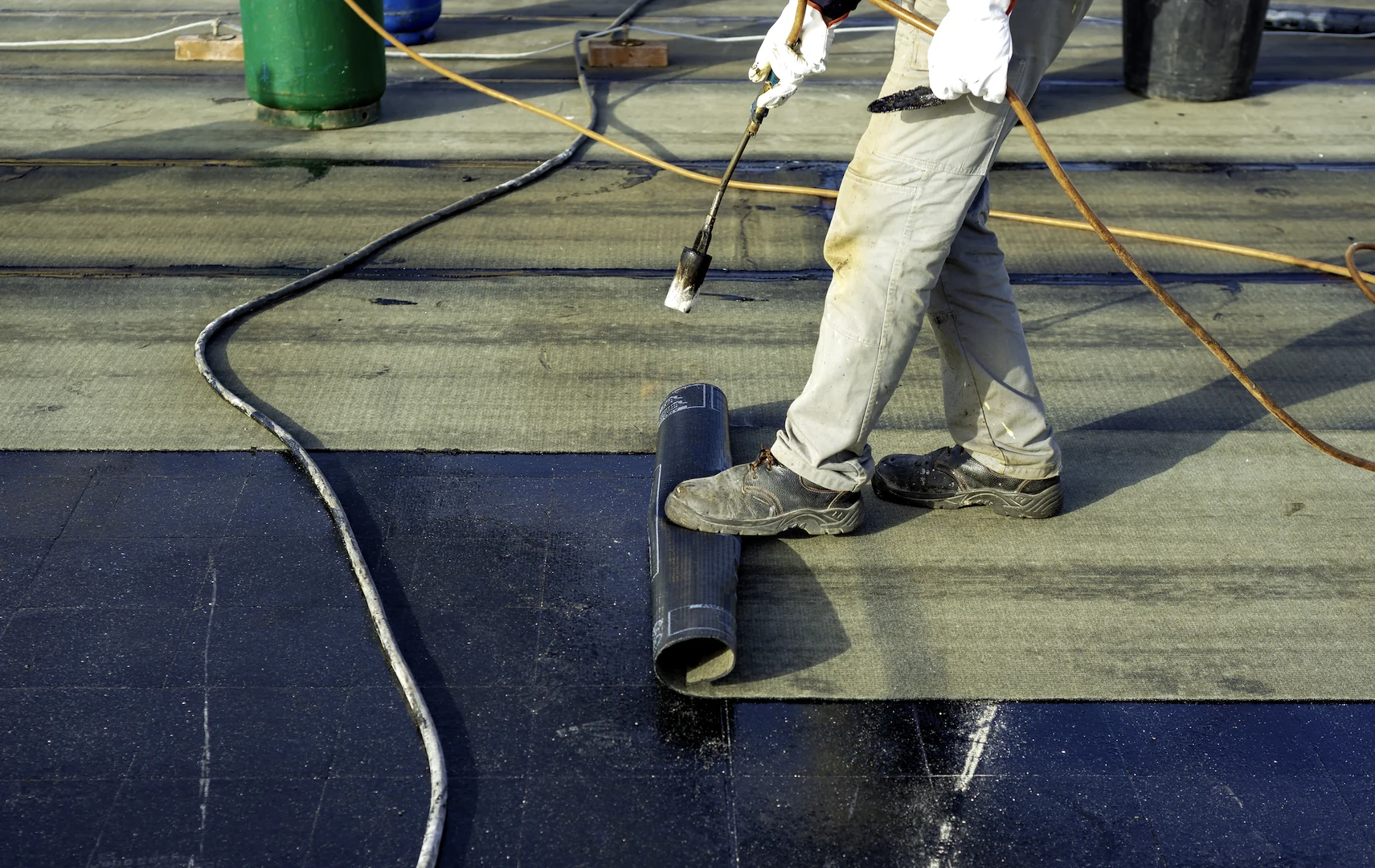
EPDM has been installed on Capital Region roofs for decades, long enough that most of what fails on an EPDM roof failed at a seam. The membrane sheet itself typically outlasts nearly everything else on the roof; the seams are where an installer's shortcuts show up years later.
In warm climates, white membrane's reflectivity keeps cooling loads down, which is why TPO and white membranes dominate there. In a Capital Region winter, black EPDM's heat absorption works differently: a dark roof surface picks up more solar heat on clear winter days, which can help shed snow and reduce the kind of prolonged ice buildup at drains and low spots that a reflective white roof holds onto longer.
That's not a reason to default to EPDM on every roof, since building energy use, insulation, and cooling season length all factor into the membrane color decision, but it's a real, climate-specific tradeoff worth weighing rather than assuming white is automatically the better choice everywhere.
EPDM installs in the same three attachment categories as TPO: ballasted with stone, mechanically attached with fasteners and plates, or fully adhered with bonding adhesive. Ballasted EPDM is common on large flat institutional and warehouse roofs where the structure can carry the added weight and the lower material cost matters on a big square footage number.
Fully adhered EPDM tends to show up more on roofs with tighter parapet details, unusual shapes, or lower structural load capacity, where ballast isn't an option and the membrane needs to be bonded directly to insulation board.
Mechanically attached EPDM sits between the two, and it's a common choice on recover projects where the deck can take fasteners but can't carry ballast weight. The fastening pattern still has to be engineered to the wind uplift rating the specific building and roof height require, which varies more across the region's mix of low warehouse roofs and taller downtown buildings than a single default pattern accounts for.
EPDM sheets are seamed together with either seam tape or liquid adhesive, and a bid that doesn't specify which, and doesn't mention primer at the seam, is a bid where the seam method is left to whoever's on the crew that day. Tape seams need a clean, primed surface and correct roller pressure to bond properly; skip the primer or rush the roller pass and the seam looks fine on installation day and opens within a couple of freeze-thaw cycles.
We've re-seamed enough EPDM roofs installed by other contractors to know the pattern: seam failure clusters at T-joints, penetrations, and parapet transitions, exactly the spots where a rushed install skips the extra prep work those details actually require. Our own EPDM installation work treats those detail areas as the part of the job that actually determines whether the roof holds up.
Seam failures we've repaired on other contractors' EPDM installs almost always trace back to a missing or skipped step in the bid itself, not a defect in the membrane material.
On an EPDM bid we check for:
A lot of EPDM roofs on schools and municipal buildings around the region are original installs pushing toward the end of a long service life, and the deck underneath is usually the deciding factor in whether recover makes sense. If the existing EPDM has held up with only isolated seam repairs and the deck is dry, recovering with new EPDM or a coating system can extend service life without the disruption of full removal.
Where seam failures are widespread rather than isolated, that's usually a sign of a systemic installation problem rather than normal aging, and recovering over a roof with that many failure points just buries the same weak seams under new material.
It has one genuine advantage: dark membrane absorbs more solar heat, which can help shed snow and reduce prolonged ice at drains. It's one factor among several, not an automatic default.
The membrane sheet itself is durable; seams depend entirely on installer prep and technique. Skipped primer or rushed rolling at tape seams is the most common cause of early seam failure.
Tape seams use a factory-applied adhesive strip activated with primer and roller pressure; liquid adhesive is hand-applied and cured. Both work when done correctly; both fail the same way when prep is skipped.
Often yes, if the deck is dry and failures are isolated rather than widespread. Systemic seam failure across the roof usually points to a deck or installation problem worth addressing before recovering.
Both can deliver long service life when installed correctly. EPDM's field material has a long track record; the practical difference in most failures comes down to seam workmanship rather than the membrane itself.