60-Mil TPO and the Missing Number on Most Bids
Review the scope, field conditions, system options, and planning considerations for this commercial roofing topic.
Read More →
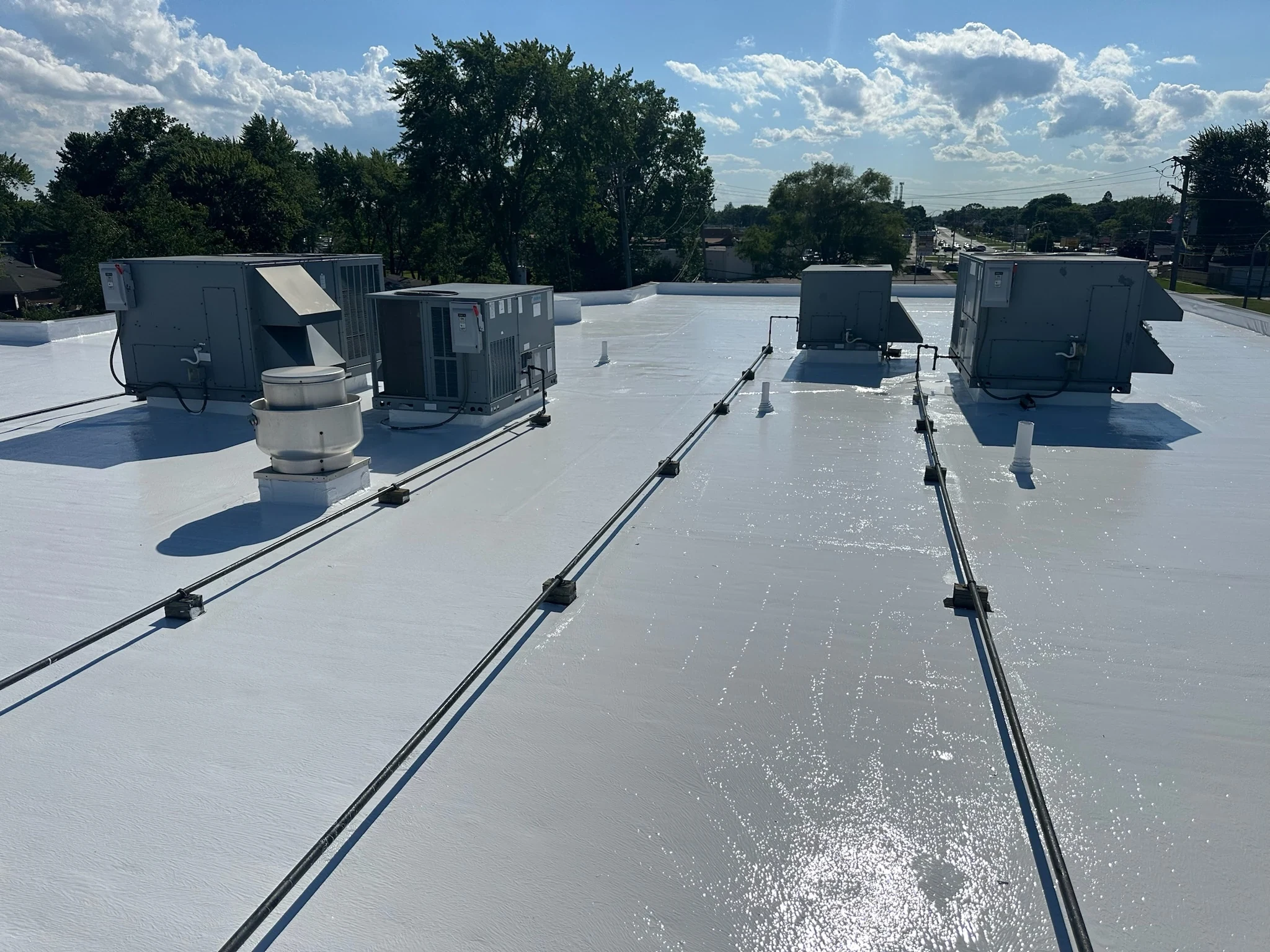
Some state and municipal roof specifications call for a reflective membrane to meet cool-roof or energy code requirements, and white EPDM is one way to get that reflectivity while keeping rubber membrane's field track record. It's a smaller share of the market than black EPDM or white TPO, and fewer crews have real experience seaming and detailing it correctly.
Government and institutional buildings, a decent share of the roof stock around the Capitol complex and SUNY campuses, sometimes carry energy code or LEED-adjacent requirements calling for a minimum solar reflectance index on new roofing. White EPDM satisfies that requirement while offering the same seam and flashing detailing familiar from black EPDM installs.
On buildings without a reflectivity requirement, white EPDM doesn't buy much over black beyond aesthetics, and it costs more. We check the actual project spec or energy code trigger before recommending it over black EPDM or a white TPO alternative.
This comes up most on state-managed buildings and newer school construction, where the design and construction standards governing the project sometimes reference a reflectivity threshold directly. A private commercial building without that kind of oversight is less likely to carry a hard requirement, which is why we ask early whether reflectivity is a mandate or a preference before pricing the membrane.
White membrane's reflectivity depends on the surface staying relatively clean, and dirt, pollen, and general airborne grime reduce reflectivity well before the membrane itself is due for replacement. A roof near a rail yard or industrial corridor, Rotterdam's rail-adjacent industrial park is one example, picks up more surface soiling than a roof in a cleaner suburban office park, and that soiling cuts into the reflectivity the membrane was specified to provide.
Periodic washing can restore some reflectivity, but that's a maintenance line item a lot of proposals leave out entirely, quoting the reflective membrane's initial performance without mentioning that it needs upkeep to hold that number over time.
Pollen loads in the spring shoulder season add a Capital Region-specific wrinkle, since a heavy pollen year can visibly dull a white roof's surface within weeks, well before general airborne grime would otherwise account for it. Building owners who track reflectivity for code documentation purposes need to plan a wash cycle around that seasonal pattern rather than a fixed annual date that might land right after a fresh coat of pollen settles.
The seam risks are identical to black EPDM: tape or liquid adhesive seams depend on primer and correct application, and a rushed seam fails the same way regardless of membrane color. Nothing about white EPDM changes the fundamentals of getting a seam right.
What does change is that seam tape and flashing tend to be less commonly stocked in white than black, and a crew unfamiliar with white EPDM sometimes substitutes black flashing at penetrations, which is a workmanship shortcut, not a structural problem, but it undercuts the reflective roof's intended appearance and can flag as a nonconformance on an energy-code-driven project.
A bid quoting white EPDM without stating whether reflectivity is actually a project requirement can end up billing for a premium the building doesn't need.
On a white EPDM proposal we check for:
When a recover project is triggered partly by a new reflectivity requirement rather than roof failure, the existing deck and insulation are often still serviceable, and the scope is really about the membrane and code compliance rather than a full system replacement. We separate what's actually failing from what's being replaced to satisfy a code trigger, since those are two different conversations with two different price tags.
On institutional buildings with long ownership horizons, it's worth confirming the reflectivity requirement is a hard code mandate versus a voluntary target, since that changes whether a lower-cost non-reflective alternative is even an option.
The base membrane life expectancy is comparable; what typically differs is reflectivity performance over time, which fades with surface soiling regardless of the membrane's structural condition.
No. Reflectivity requirements usually apply to specific project types or jurisdictions with energy code triggers. We check the actual applicable code before recommending it.
Periodic washing helps, though it's a maintenance item that needs to be planned for and isn't always included in an initial roofing bid.
No, the seam mechanics are identical. The risk is the same primer and prep discipline required on any EPDM seam, regardless of membrane color.
Generally yes, and the added cost is only worth it when a genuine reflectivity requirement or energy goal applies to the project.