Spray Foam Roofing: Where Nothing Else Fits Well
Review the scope, field conditions, system options, and planning considerations for this commercial roofing topic.
Read More →
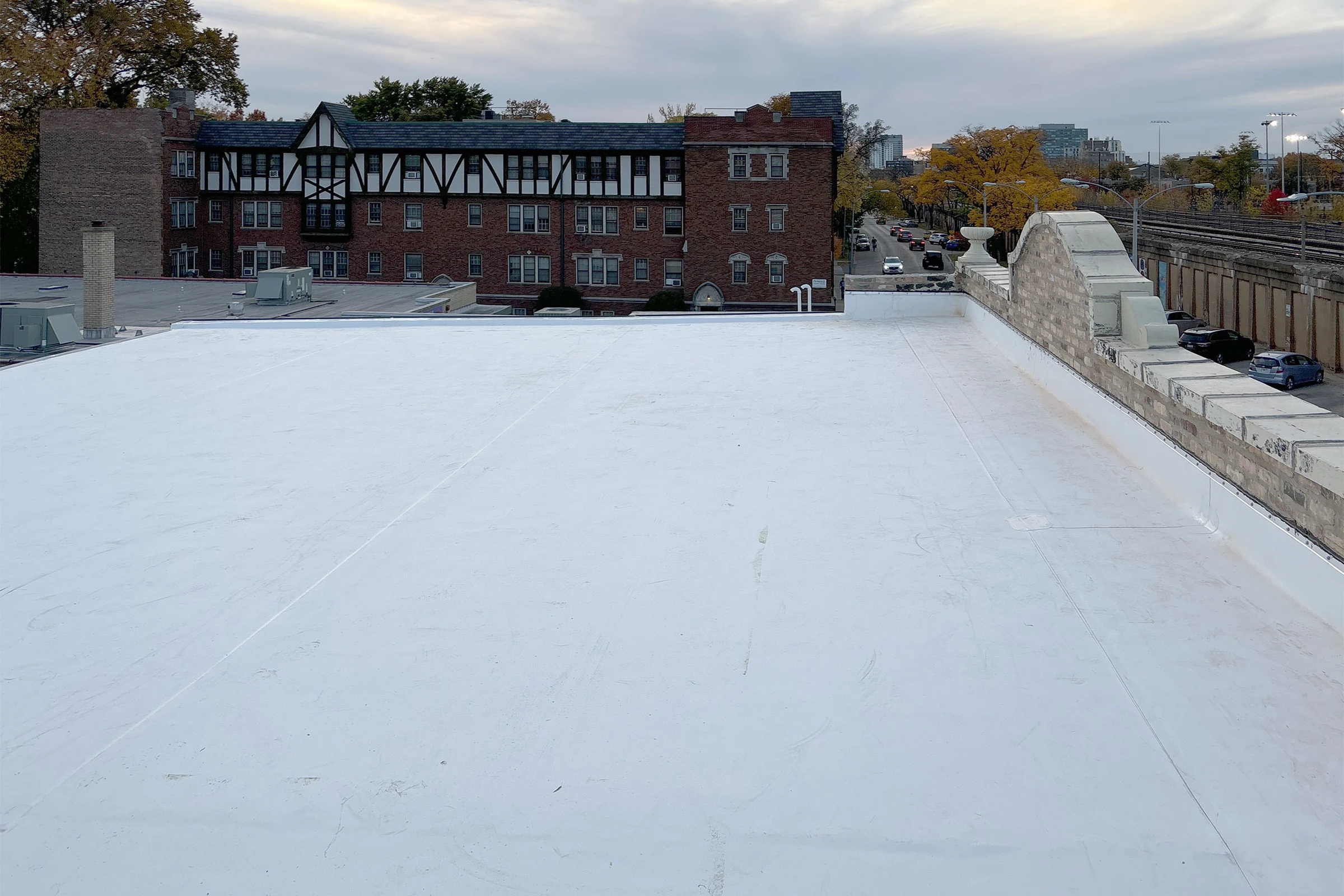
TPO membrane comes in more than one thickness, and a bid that lists a TPO roof system without a mil rating is telling you nothing about what actually goes down. On the flat institutional and warehouse roofs common across the Capital Region, that missing number is often where the price difference between two bids actually lives.
TPO is sold in 45-mil, 50-mil, 60-mil, and 80-mil thicknesses, and the membrane itself is the same white or gray sheet material regardless of which one a contractor quotes. A proposal that names the manufacturer and the color but skips the mil thickness leaves the actual specification undefined, and two contractors bidding the same TPO roof can be pricing entirely different membranes.
We have reviewed enough bids on state office buildings and school roofs around Albany to know that thickness is one of the first things that gets quietly downgraded when a number needs to come down. A 45-mil membrane and a 60-mil membrane look identical on a spec line that just says TPO roofing system.
Flat roofs across the region carry real snow load through the winter, and a nor'easter that drops a foot and a half of wet snow followed by a freeze-thaw cycle puts weight and stress on the membrane that a thinner sheet handles worse than a thicker one. Ice that forms at parapet walls and roof drains, then expands and contracts through repeated freeze-thaw swings, works on membrane thickness the same way it works on pavement cracks.
On institutional roofs with rooftop mechanical equipment, foot traffic for maintenance access adds another stress the membrane has to absorb over its service life. 60-mil membrane has more material to resist punctures from dropped tools, HVAC service carts, and the general wear of a roof that gets walked regularly, which matters more on a hospital or school roof than on a low-traffic warehouse.
Mechanically attached TPO uses fasteners and plates through the membrane at set intervals, fully adhered systems bond the membrane to the substrate with adhesive, and ballasted systems hold the membrane down with stone or pavers instead of fasteners. Each method puts different stress on the sheet: mechanically attached systems concentrate wind uplift forces at fastener rows, while ballasted systems add dead weight the roof structure has to be rated to carry.
A recover project over an aging roof deck sometimes limits which attachment method is realistic, and that is a structural conversation before it is a membrane conversation. We check deck condition and existing attachment before recommending a method, rather than defaulting to whichever install is fastest for the crew.
Contractors sometimes bundle attachment method, fastening pattern, and seam detail into vague line items that sound thorough without actually committing to a spec, and a facilities manager reading a bid casually can miss that the specifics aren't really there.
On a TPO bid we check for:
A lot of the flat roof stock downtown around the Capitol complex and on SUNY and hospital campuses is old enough that the real decision isn't which membrane to buy, it's recover versus full tear-off. See our recover and overlay options for how we weigh that against replacement. Recovering over an existing roof that's still structurally sound and reasonably dry avoids disposal costs and shortens the installation window, which matters on a building that can't easily go without weather protection during a Capital Region winter.
Recover only makes sense when the existing roof passes a moisture scan and the deck isn't holding water under the old membrane. We won't recommend recover over a roof with trapped moisture just to hit a lower number, because that moisture keeps working under the new membrane regardless of what's installed on top of it.
The number is the membrane's thickness in thousandths of an inch. 60-mil has more material to resist punctures, foot traffic wear, and long-term weathering than 45-mil, at a modest cost difference.
Not automatically, but warranty terms are often tied to the mil thickness installed, so a bid quoting a long warranty on thin membrane is worth double-checking against the manufacturer's actual warranty schedule.
No. A low-traffic warehouse roof with minimal rooftop equipment can perform fine on a lighter membrane. Roofs with heavy foot traffic, snow load, or long service life expectations are where the thicker membrane earns its cost.
Often yes, provided the existing roof passes a moisture inspection and the deck is sound. We check both before recommending recover.
Heavier accumulated snow adds load the roof structure has to carry, which factors into whether ballasted attachment is appropriate or whether mechanically attached or fully adhered systems are the better structural fit.