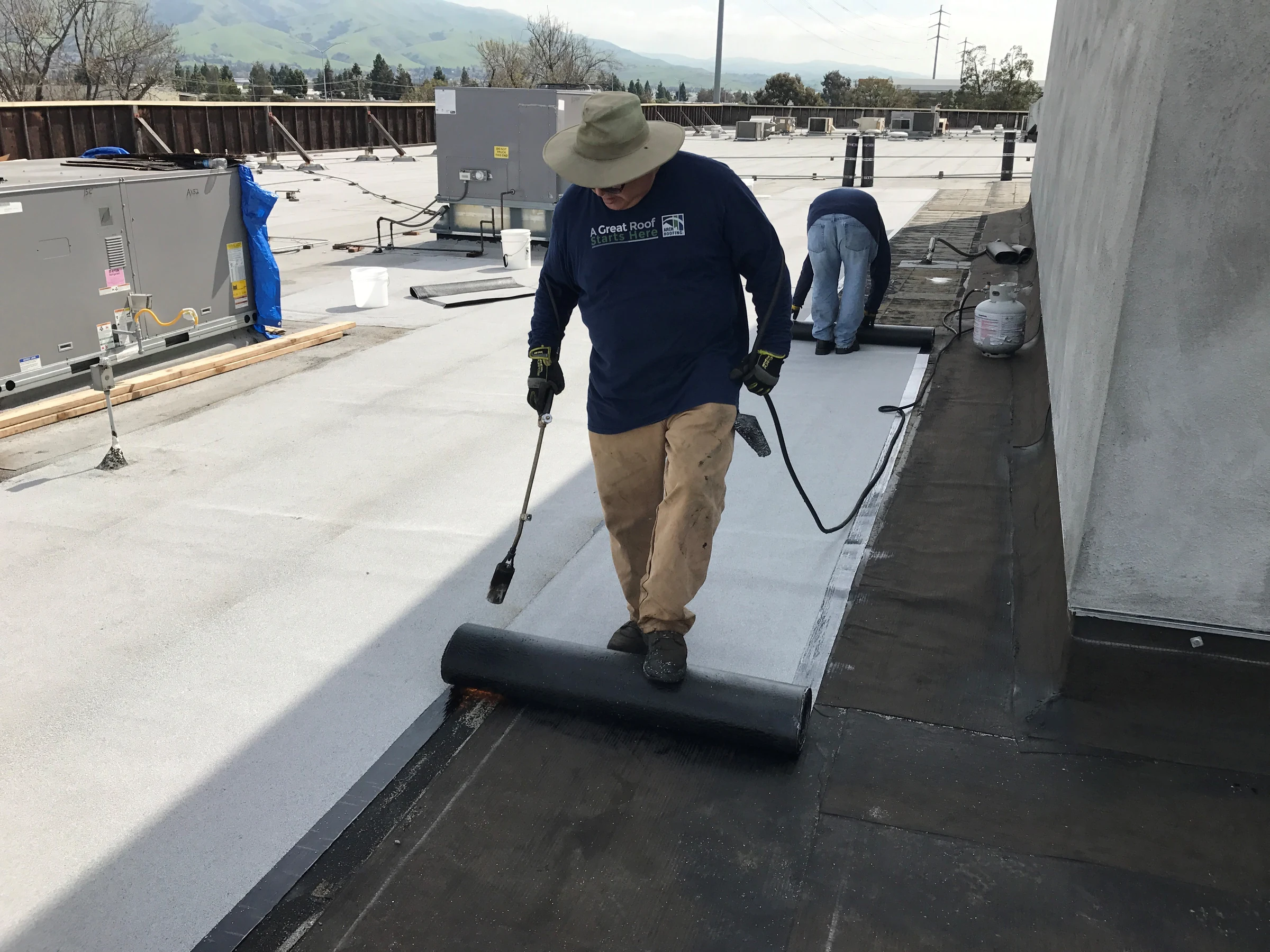
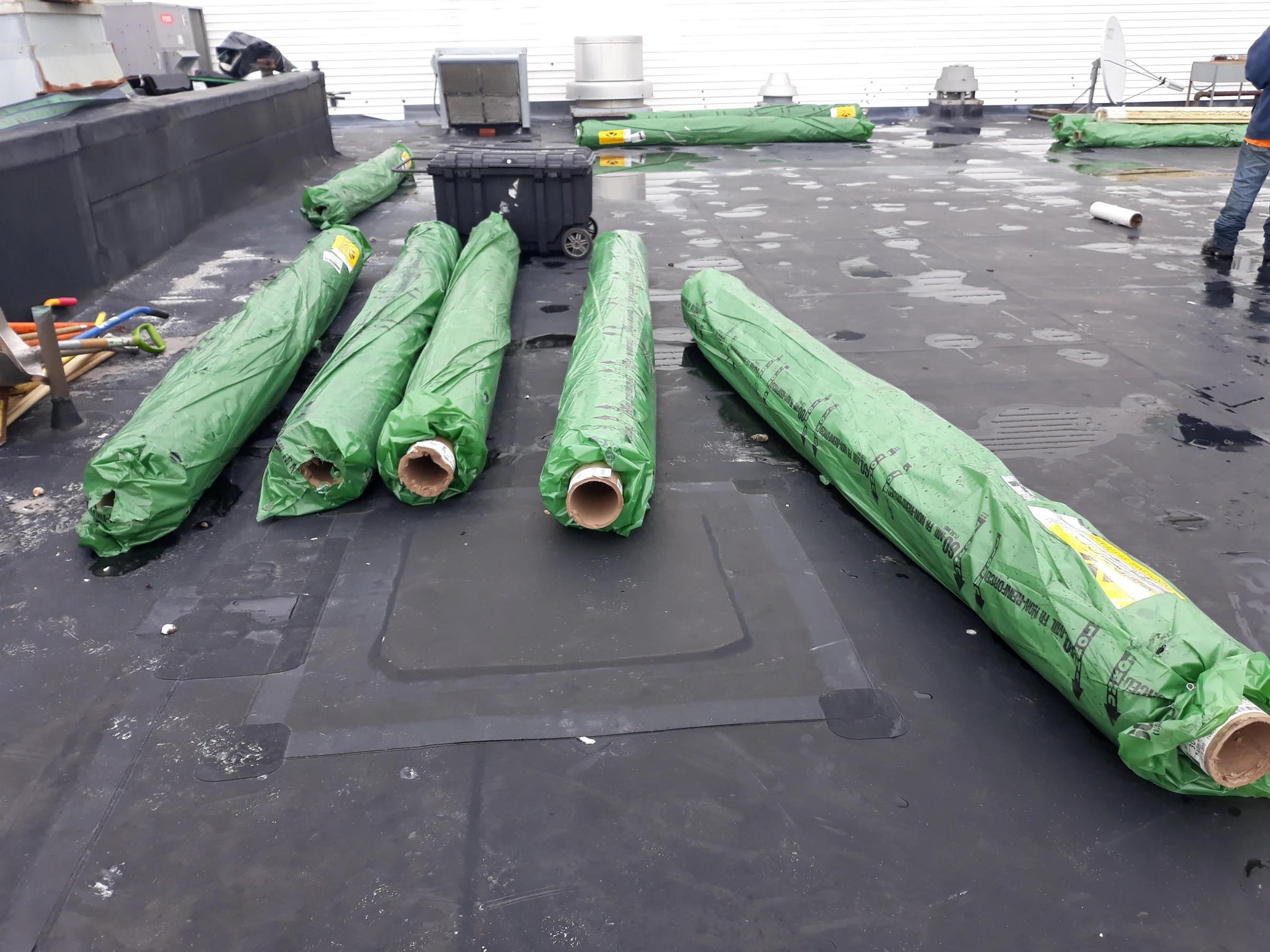
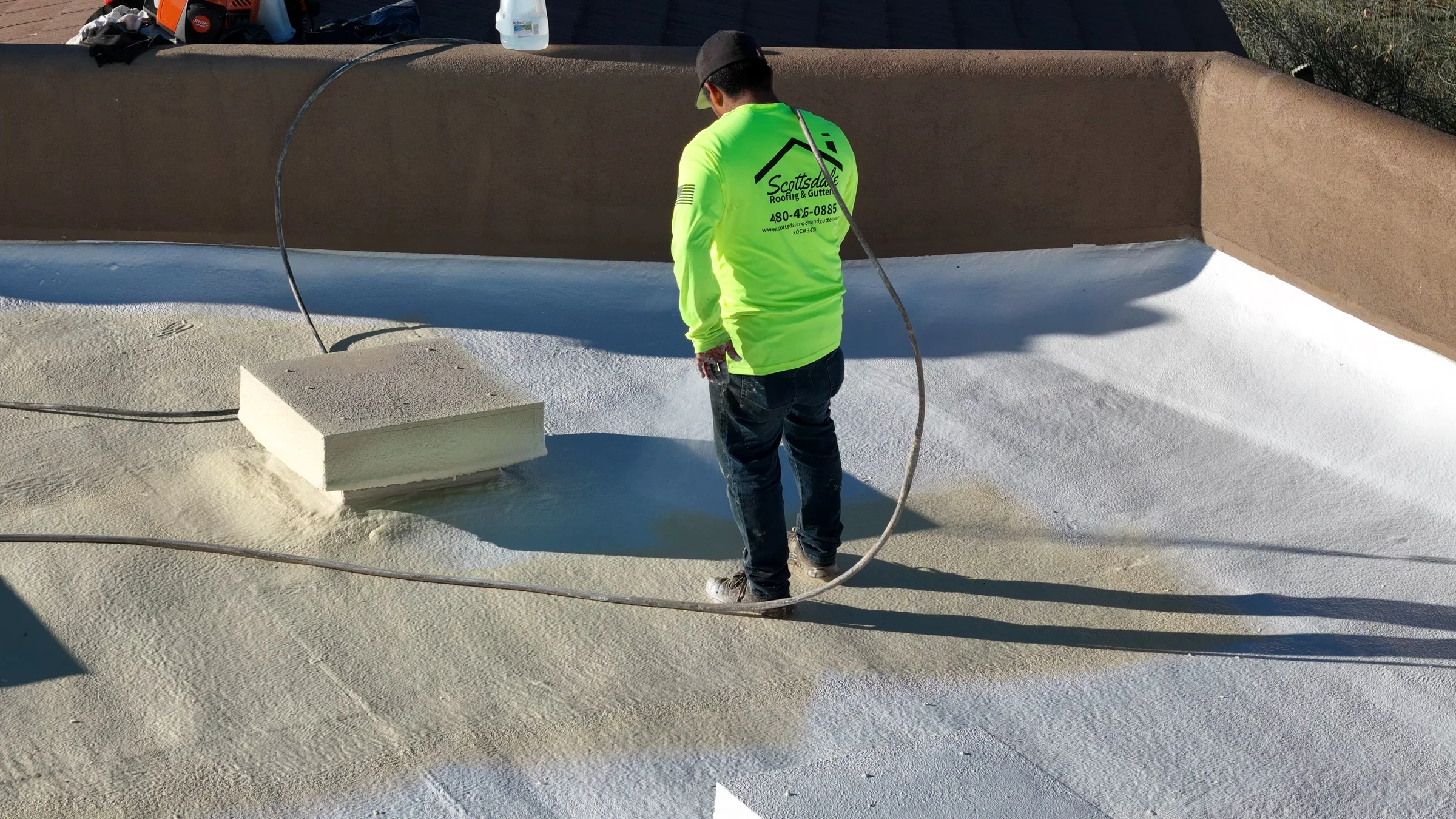
SBS Modified Bitumen: The Torch-Down Question Left Off Bids
Review the scope, field conditions, system options, and planning considerations for this commercial roofing topic.
Read More →
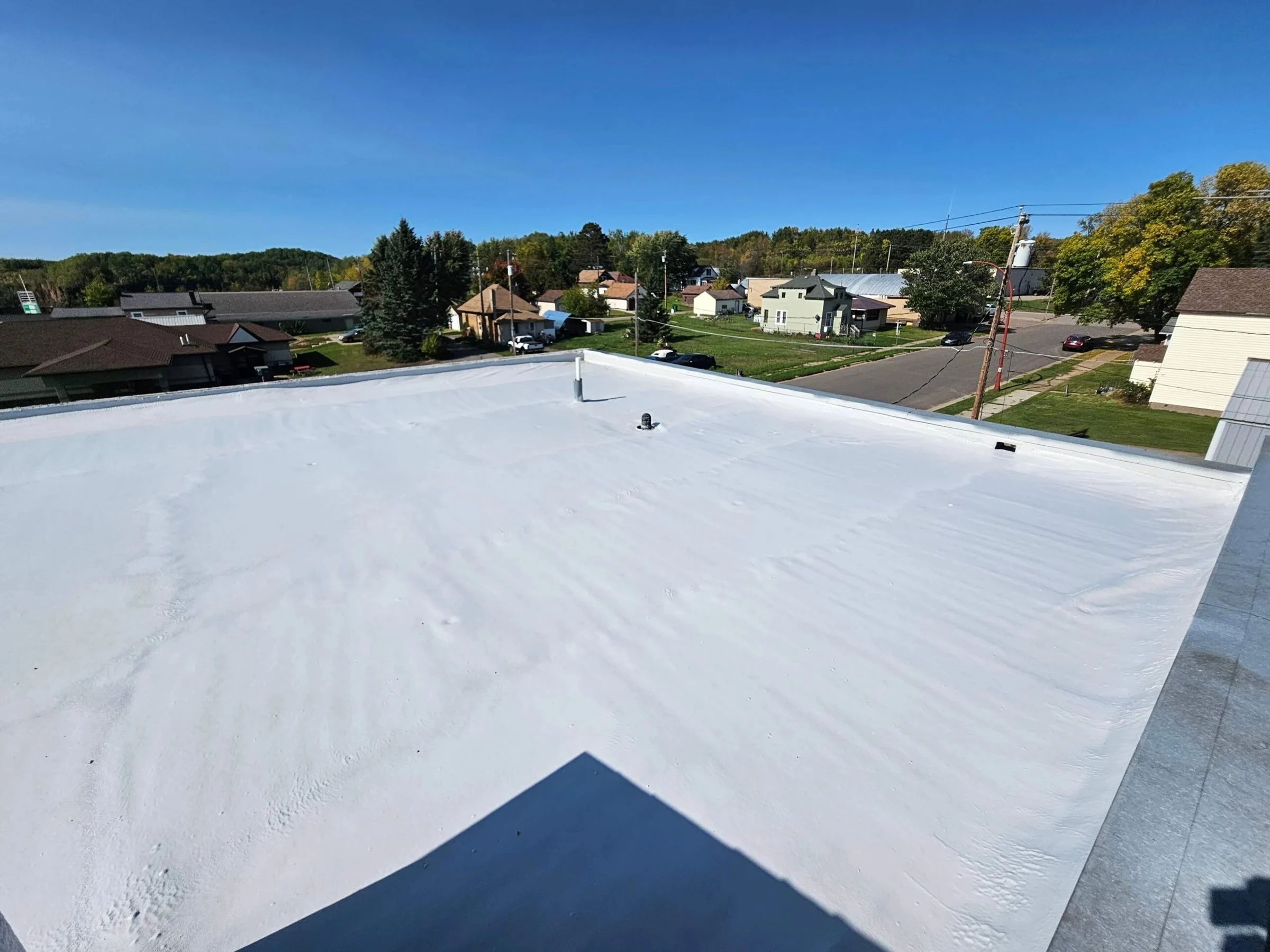
A silicone coating isn't a one-time fix, it's the start of a recoat cycle that repeats roughly every ten to fifteen years for as long as the building owns and maintains the underlying roof structure. Facilities managers overseeing multiple properties plan around that cycle rather than treating a coating as a permanent solution.
Silicone coating adheres to a range of existing substrates: aged EPDM, granulated modified bitumen, built-up roofing, and properly primed metal panels are all common coating candidates across the flat and low-slope roof stock downtown and on older school buildings throughout the district. TPO is coatable too, though it needs a TPO-specific primer since standard silicone doesn't bond reliably to an unprimed TPO surface.
What silicone doesn't fix is a structurally compromised deck or a membrane with widespread physical damage rather than surface wear. Coating is a surface-level renewal strategy layered onto sound structure underneath, not a substitute for addressing deck rot, structural sag, or membrane that's torn rather than just weathered.
On the older built-up roofs still common on municipal and school buildings around the region, coating over aged granulated cap sheet is one of the more cost-effective ways to extend a roof that's otherwise performing fine but is losing its UV protection as granules wear away. We check granule loss patterns and any exposed asphalt before recommending coating over a built-up roof specifically.
A silicone-coated roof isn't done aging once the coating goes down; UV exposure, ponding cycles, and general weathering wear the coating itself over roughly a decade to fifteen years depending on thickness and exposure, after which it needs a maintenance recoat to keep performing. Facilities managers overseeing several buildings, a school district with multiple wings, a state agency with several properties, benefit from tracking each roof's coating age and staggering recoat budgets rather than discovering several roofs need attention in the same fiscal year.
We track coating age and condition on returning maintenance visits specifically so a recoat gets scheduled before the coating has fully worn through and the underlying substrate starts taking direct weather exposure again.
A coated roof still goes through the same freeze-thaw cycling as an uncoated one, and repeated ice formation at parapets, drains, and low spots stresses the coating at those same points over successive winters. Coating thickness at these detail areas matters more than field thickness, since detail areas take the most repeated stress.
Nor'easters that dump wet snow followed by a hard freeze put real weight and thermal stress on a coated roof's low spots, and a coating applied without adequate reinforcement at those areas is the first place we see it start to crack or delaminate on a return inspection.
Silicone's smooth cured surface is more slippery underfoot than a granulated cap sheet or a textured membrane, which matters on roofs that see frequent maintenance foot traffic to reach rooftop units.
A few things we build into a coating system on roofs with regular service access:
On a roof that's structurally sound with a substrate that's still intact, coating typically costs a fraction of full tear-off and replacement, which is the entire economic case for choosing it on an aging but serviceable institutional roof. Our silicone coating work follows this logic on every project, not a blanket recommendation regardless of condition. The tradeoff is that coating extends the life of an existing system rather than resetting the clock the way full replacement does.
We look at the roof's total remaining service life honestly before recommending a coating cycle over replacement, a roof with one or two recoat cycles left in it is a reasonable coating candidate, while a roof that's already been coated multiple times and is showing substrate-level problems underneath the coating is closer to a replacement decision than another recoat.
It depends on the underlying substrate's condition, but most roofs can go through a couple of recoat cycles before substrate-level problems make replacement the more economical choice.
Most substrates are coatable with proper prep, though TPO needs a specific primer and a structurally damaged deck or membrane isn't a coating candidate regardless of substrate type.
Yes, the cured surface is smoother than a granulated cap sheet, which is why we add textured walkway pads and slip-resistant additive at service access routes.
Roughly every ten to fifteen years depending on coating thickness and exposure, which is why we track coating age on facilities with multiple buildings to plan recoat budgets ahead of time.
The stress concentrates at the same points, parapets, drains, and low spots, and adequate coating thickness and reinforcement at those details matters more than field thickness for withstanding repeated winters.