60-Mil TPO and the Missing Number on Most Bids
Review the scope, field conditions, system options, and planning considerations for this commercial roofing topic.
Read More →
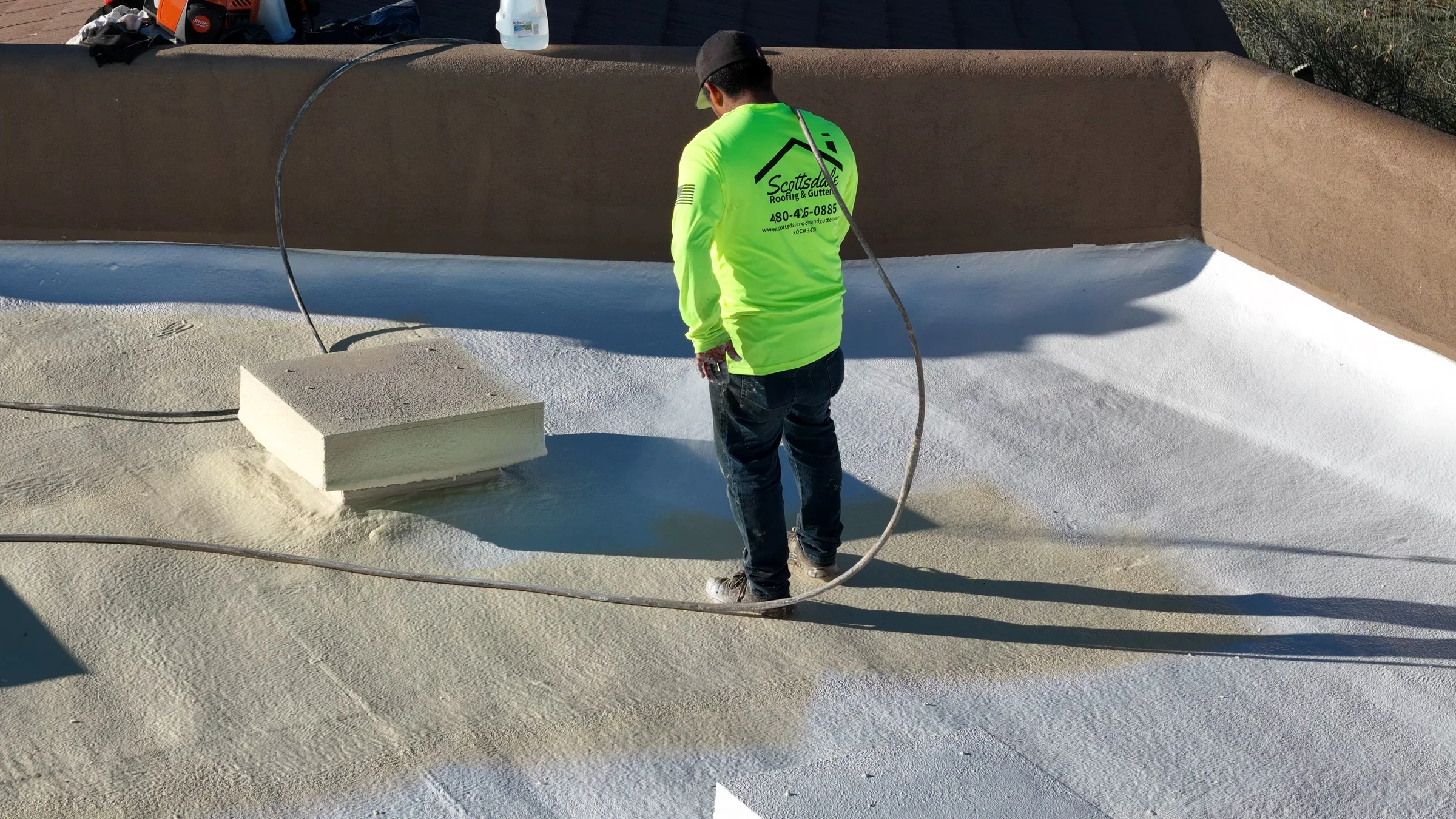
Spray polyurethane foam roofing solves a specific problem: roofs with irregular shapes, heavy penetration density, or drainage problems that would otherwise need expensive tapered insulation work. It's also one of the more weather-sensitive systems to install correctly, which narrows the installation window here more than most alternatives.
Roofs with a lot of rooftop penetrations, mechanical units, conduit runs, pipe clusters common on older industrial buildings around Rotterdam's rail-adjacent industrial park and similar aging light-industrial stock, are expensive to flash properly with a membrane system, since every penetration needs individual flashing detail. SPF flows around and self-flashes these penetrations as it's sprayed, cutting the labor-intensive detail work a membrane installation requires at a penetration-dense roof.
SPF also builds drainage into the application itself, since the foam can be sprayed at variable thickness to create slope toward drains on a roof that currently ponds because it was never built with adequate slope. That avoids the cost of tearing off and adding tapered insulation board separately, which is often the more expensive way to solve the same drainage problem on a membrane roof.
Older mill and converted-industrial buildings around the region, the kind with irregular additions and rooflines stacked up over decades, are another place SPF's ability to conform to odd geometry earns its cost. A membrane system on a roof with multiple roof heights, offsets, and transitions multiplies the flashing detail work at every joint, while sprayed foam simply follows the existing shape.
Foam is lightweight compared to ballast or multiple membrane layers, which matters on older buildings where the structure's load capacity is a real constraint on what recover options are viable. A roof that can't structurally support ballasted TPO or EPDM recover can often support SPF without a structural upgrade.
We check existing structural load ratings before recommending SPF over a heavier system, since the weight advantage is only relevant when the existing structure is actually the limiting factor.
This comes up most on older buildings that have already been recovered once or twice, where each prior recover added a layer of weight the original structure wasn't necessarily designed to keep carrying indefinitely. SPF lets us add drainage correction and a fresh weatherproofing layer without adding meaningfully to that accumulated dead load.
Exposed foam degrades under UV exposure within a short period, which means SPF always needs a protective coating, typically silicone or acrylic, applied over the cured foam before the roof is considered finished. A bid that separates foam application and coating into optional line items is misrepresenting the system, since foam without coating isn't a complete, weathertight roof.
Coating thickness on an SPF roof matters as much as it does on any coated system, and the same dry film thickness discipline applies here that applies to a standalone coating project.
Granule-embedded coating surfacing is also an option on SPF roofs that see foot traffic, giving the finished surface the same kind of wear resistance and walkability a granulated cap sheet provides, at a cost premium worth discussing upfront rather than discovering after the smooth-coated roof turns out to be slippery for maintenance staff.
Spray foam requires a dry substrate and specific temperature and humidity conditions to cure properly, which narrows the practical installation season around here more than most alternatives.
On an SPF bid we check for:
An SPF roof's protective coating wears over time the same way a standalone coating does, and periodic recoating is part of the system's expected maintenance rather than a sign something went wrong. Facilities managers who budget for that recoat cycle up front get significantly more service life out of an SPF roof than those who treat the initial installation as a one-time expense. It's the same recover logic behind our recover and overlay work more broadly.
On institutional buildings with long ownership horizons, we lay out the expected recoat interval at the time of installation so the maintenance cost isn't a surprise five to ten years later.
Often yes. Foam self-flashes around penetrations as it's applied, which reduces the detail labor a membrane system needs at each individual penetration.
Always. Exposed foam degrades quickly under UV exposure, so a coating layer is a required part of the system, not an optional add-on.
No. It needs specific temperature, humidity, and dry-substrate conditions to cure properly, which narrows the realistic installation window more than membrane systems.
It varies by coating type and exposure, but periodic recoating is a normal, expected part of maintaining an SPF roof rather than a sign of a problem.
Yes, foam is lightweight compared to ballasted systems, which makes it a practical option when the existing structure limits what recover approaches are viable.